eCommerce
PorTecnofin Team
Why Your B2B Company Needs Its Own E-Commerce: 7 Strategic Advantages
E-commerce has ceased to be an exclusive tool for direct-to-consumer (B2C) brands. If your company operates under the Business to Business (B2B) model, relying on emails, spreadsheets, phone calls, or physical visits to process orders is severely limiting your profitability and responsiveness. Implementing a corporate e-commerce is not about having a nice catalog; it is about a reengineering of your business processes.
Below, we break down seven operational and financial advantages of developing your own online store for your B2B operation, based on the fundamental pillars of digital commerce but adapted to high-volume transactional demands.
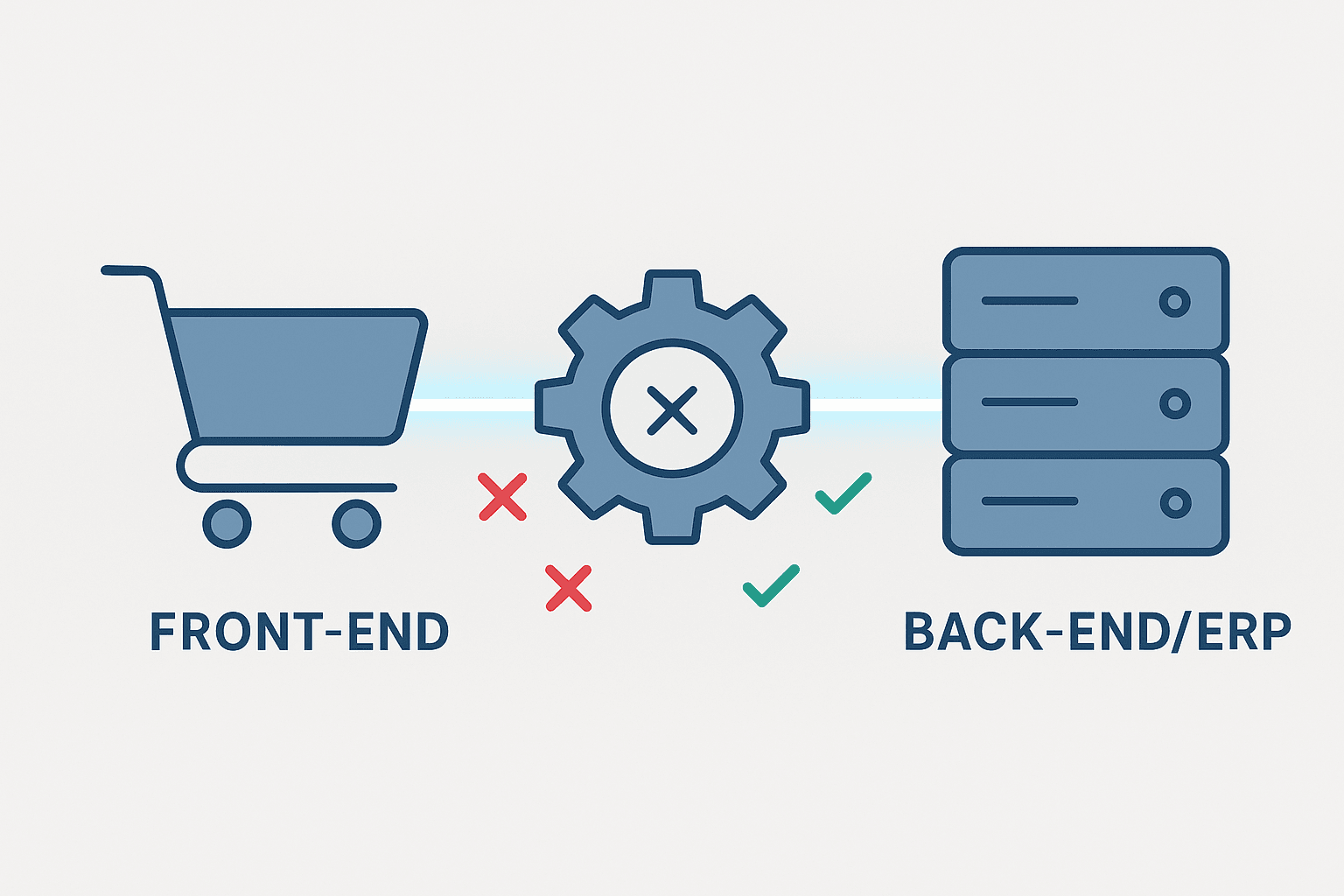
Operational Cost Reduction and Structural Scalability In the B2B environment, the administrative cost of processing an order manually (order receipt, stock verification, credit validation, typing into the ERP) erodes the transaction's profit margin. By having your own e-commerce, you transfer order creation to the customer. This drastically reduces typing errors and the operational burden on your customer service team. Unlike operating under a third-party marketplace that penalizes success with sales commissions, a proprietary platform allows you to scale transaction volume without proportionally increasing operational costs.
Multichannel Approach and Corporate Loyalty Ecosystem Today's B2B buyer demands the same technological fluidity they experience in their daily lives. A proprietary e-commerce opens a self-service channel that integrates organically with your sales force. Your sales executives can transition from being order takers to becoming strategic advisors to close complex deals, while the online portal absorbs recurring repurchases. This multichannel approach controls all touchpoints with the account, reducing friction in the procurement process and ensuring long-term retention.
Efficiency in Procurement and Recommendation Effect (Word of Mouth) In the industry, a supplier that streamlines the purchasing department's work immediately becomes an indispensable partner. If your platform allows bulk order uploads via CSV files, saved shopping lists, and multi-user approvals based on roles, you raise buyer efficiency. A procurement manager satisfied with your company's technology becomes the main promoter of your brand, recommending your services among different branches, companies within the same holding group, or colleagues in the sector.
Uninterrupted Operation: The Authentic 24/7 Production lines or logistics operations are not limited to 9-to-6 office hours. Frequently, maintenance or inventory managers structure their replenishment requirements outside of business hours. A B2B e-commerce ensures that your complete catalog, technical data sheets, safety certificates, and inventory availability are accessible 24 hours a day. This autonomy eliminates wait times and allows orders to be placed at any time, ensuring continuous cash flow.
Secure Transactions and Financial Traceability Corporate purchases demand strict financial controls. A proprietary B2B e-commerce allows advanced configurations that basic e-commerce cannot offer. It is possible to integrate specific business rules from your ERP, respecting individual credit limits, applying 30, 60, or 90-day payment terms, and issuing automated tax documentation. Additionally, it provides the counterparty with a historical record of orders and account statements, granting total transparency to the transaction and simplifying audits for both companies.
Logistics Adapted to Sector Demands B2B shipping rarely consists of sending a small box through the postal mail. It requires pallet consolidation, heavy cargo transportation, partial deliveries, and strict scheduling at receiving docks. By having control of the code in your e-commerce, it is feasible to enable complex logistics integrations, dynamically calculate volumetric freight rates, and provide exact visibility of shipping status in real time. Reducing logistics uncertainty radically decreases operational inquiries to your executives.
Data Intelligence: Precise Upselling and Cross-selling The greatest asset of owning your online store's infrastructure is first-party data. By analyzing your customers' purchasing behavior, the platform can anticipate their needs. If a corporate customer purchases industrial consumables every 40 days, the system can generate an automatic replenishment email on day 35. Similarly, compatibility matrices can be configured: if they add specific equipment to the cart, the platform will instantly suggest the exact complementary spare parts or supplies, increasing the average ticket through technical and useful cross-selling.
The transition towards the digitalization of B2B sales is no longer a simple alternative; it is a necessity to protect market positioning and optimize commercial margins. Future profitability will depend on technological architectures that understand your company's internal complexity.
At TECNOFIN, we are specialists in developing robust, secure virtual stores tailored to corporate demands. If your company is ready to build a digital sales channel that automates operations and accelerates revenue, contact us today. Let's discuss your technical infrastructure requirements and generate a structured quote for your project: https://www.tecnofin.com/contact

Tecnofin is your trusted partner in the e-commerce sector. We have a team of expert developers who provide personalized service to help you design a virtual store that meets the specific needs of your business. Don't hesitate to contact us to receive a quote for the ideal store for your company!